

Can You Open a Garage Door in Denver During a Power Outage?
The lights go out. The motor stops humming. And suddenly, your garage door might as well be a wall. Denver homeowners deal with outages more than they'd like — snowstorms, grid failures, summer overloads — and when the power dies, getting that door up becomes the only thing standing between you and your morning commute. Good news? You're not locked in. Bad news? Most people have no idea how to disengage the system without breaking something.
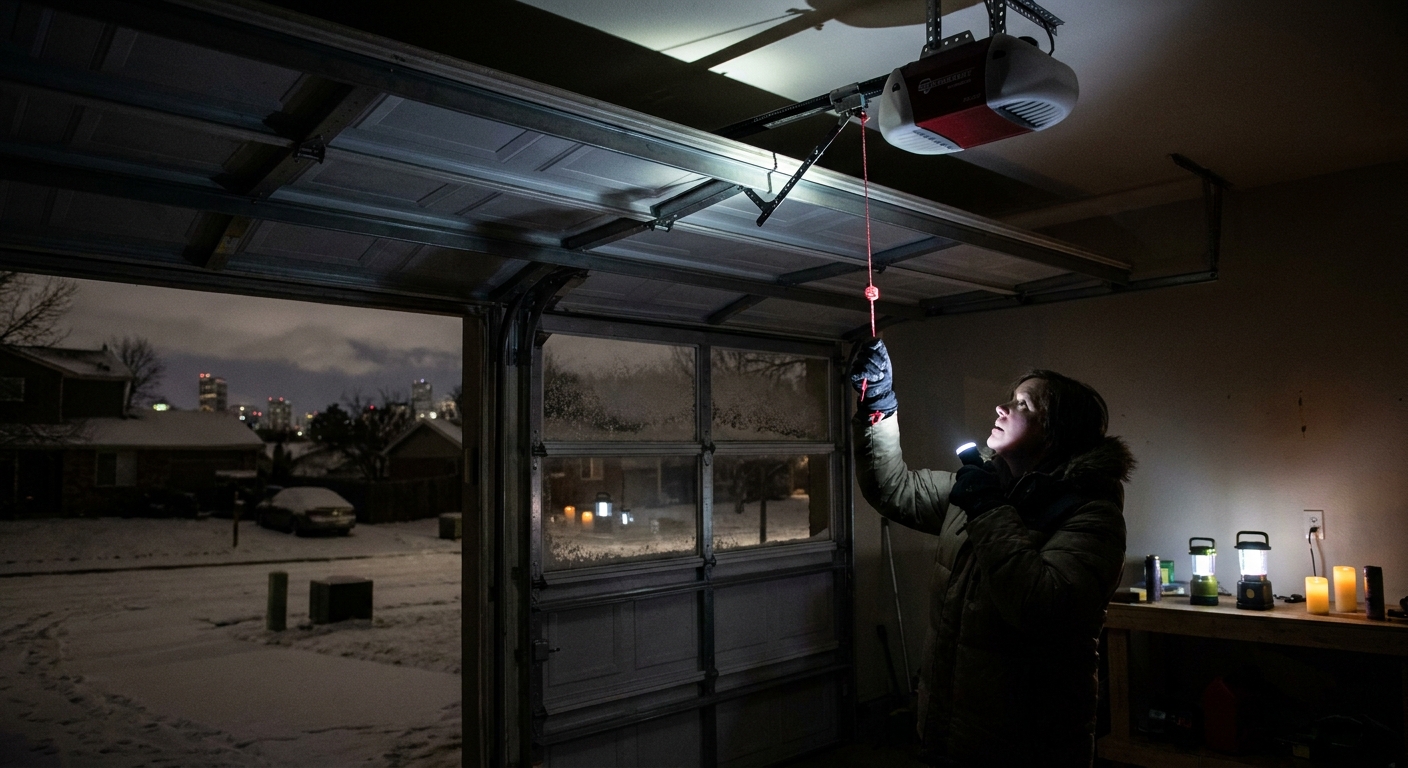
Here's what matters. Your garage door can absolutely be opened manually during an outage. But only if you know where to pull, how hard to lift, and when to stop before things go sideways. Every electric opener comes with a fail-safe. It's not hidden. It's just ignored until the moment you actually need it. And that's when mistakes happen.
The Mechanism Behind the Motor
Electric openers do the heavy lifting for you — literally. A motor mounted to the ceiling drives a chain or belt that hauls the door along a track. Push the button, and everything moves. Cut the power, and the system locks up. The motor won't respond. The remote does nothing. And unless you know how to bypass it, you're stuck.
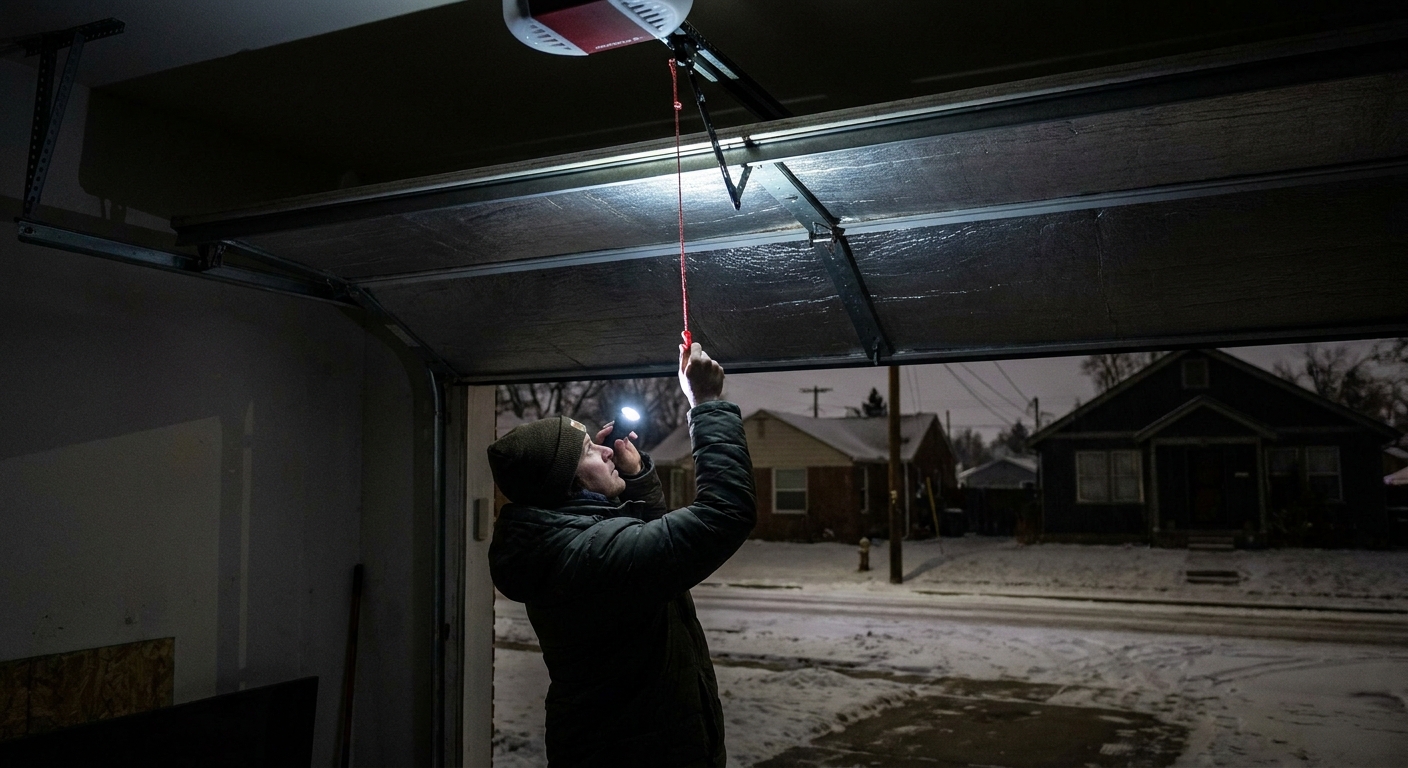
That's why manufacturers built in a manual override. It's a red cord hanging from the opener rail, designed to disconnect the door from the motor assembly. Pull it, and you regain control. Ignore it, and you're calling a neighbor for a ride.
How to Disengage and Lift It Yourself
If the power's out and you need to move your car, here's the process. Don't skip steps. Don't guess. And don't yank anything until you've checked the door itself for damage.
- Clear the area completely — pets, kids, tools, anything in the door's path
- Find the emergency release handle dangling from the opener track
- Pull it straight down with steady force until you hear a click
- Grip the door handle and lift slowly, using your legs, not your back
- If the door won't budge or feels uneven, stop immediately and call a pro
- Once open, prop it securely or have someone hold it while you back out
When the power comes back on, you'll need to reconnect the opener. Pull the release cord toward the door to re-engage the carriage. Test the system before assuming everything's fine. If it jerks or makes new sounds, something shifted during the manual operation.
When the Springs Aren't Doing Their Job
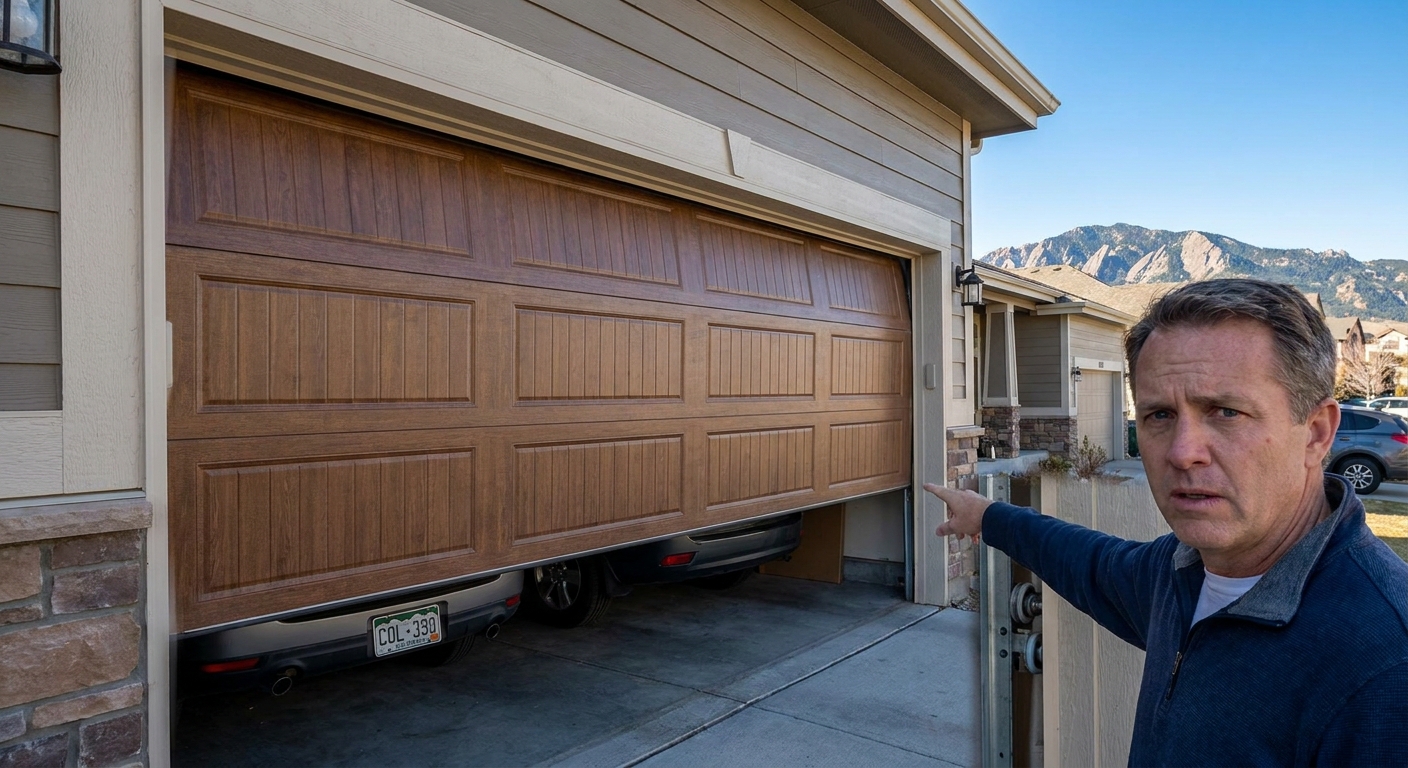
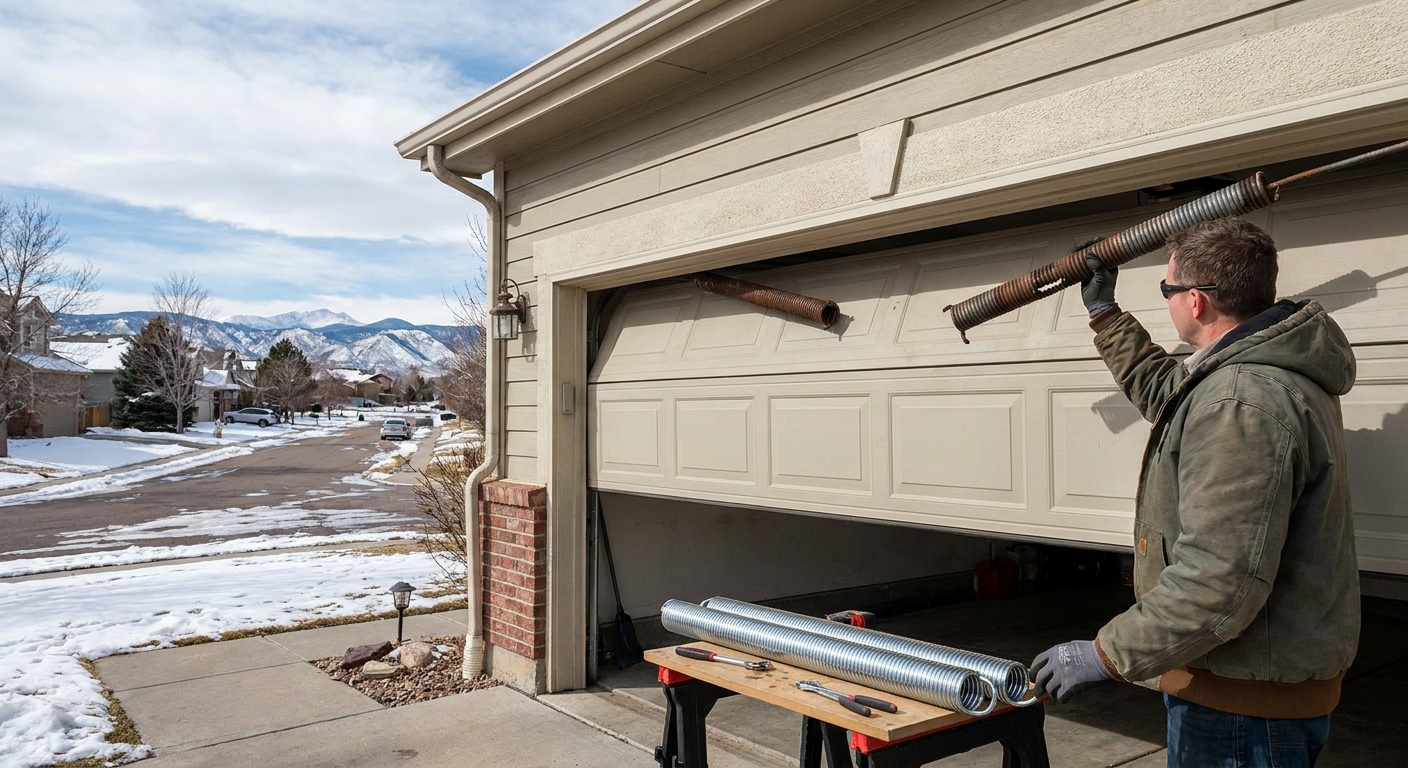
A garage door shouldn't feel like you're deadlifting a refrigerator. If it does, your springs are shot. These tightly wound coils do most of the work — counterbalancing the door's weight so you can lift it with minimal effort. When they fail, the door becomes a liability.
Broken springs don't just make things harder. They make things dangerous. The door can slam down unexpectedly. The cables can snap. And if you're underneath when that happens, the outcome isn't pretty. So if the door feels unusually heavy or won't stay open on its own, stop. That's not a power issue. That's a garage door spring repair one.
What Not to Do When the Motor's Dead
Desperation makes people do dumb things. Forcing a stuck door. Trying to reconnect the opener while the door's halfway up. Letting kids mess with the release cord because it looks simple. None of that ends well.
- Never force the door if it resists — you could snap a cable or bend the track
- Never leave the door open unattended if it doesn't lock in place on its own
- Never attempt repairs on springs or cables without professional tools and training
- Never re-engage the opener while the door is still moving or only partially closed
- Never assume the system is fine just because it opened once manually
Garage doors are under serious tension. A broken spring carries enough force to cause real injury. If you see frayed cables, gaps in the coils, or anything that looks off, call someone who knows what they're doing. DIY heroics aren't worth a trip to the ER.
Getting Ready Before the Next Outage Hits
You don't want your first time pulling that red cord to be in the dark, in a hurry, with no idea what happens next. Practice the process when everything's working. Make sure you know where the handle is. Test the weight of the door. See how much effort it actually takes.
- Keep a flashlight mounted inside the garage, not buried in a drawer
- Run a manual drill once or twice a year to stay familiar with the steps
- Inspect the springs and cables for wear during routine maintenance checks
- Consider upgrading to an opener with battery backup if outages are frequent
- Label the emergency release if multiple people in your household might need to use it
Battery backup systems are worth the investment if you live in an area where storms regularly knock out power. They keep the opener functional for several cycles, meaning you never have to touch the manual release at all. It's not cheap, but neither is being trapped in your garage when you've got somewhere to be.
Maintenance Keeps the System Ready
A garage door that works smoothly during normal operation is far more likely to cooperate during an outage. That means regular lubrication, track cleaning, and spring inspection. Most homeowners skip this until something breaks. By then, the damage is done.
Schedule a professional tune-up once a year. They'll check the tension, test the balance, and catch small problems before they become big ones. It's not exciting. It's not urgent. But it's the difference between a door that lifts easily and one that fights you every inch of the way.
Backup Power Without the Guesswork
- Battery backups typically provide enough power for 20 to 50 cycles
- They recharge automatically when grid power is restored
- Installation is straightforward for most opener models
- They eliminate the risk of manual lifting errors or injuries
For Denver homeowners who deal with frequent outages — especially during winter storms — this upgrade pays for itself the first time you don't have to wrestle a frozen door in the dark.
Your Door Works When You Do
Power outages don't have to mean you're stuck. But they do require a little preparation and a lot of respect for the mechanics involved. Know where the release is. Understand when to pull it and when to stop. And don't wait for an emergency to figure out whether your door can handle the load.
The system's built to work without electricity. It just needs you to know how to use it. And if you're not confident in your setup, or if something feels off, bring in a garage door repair in Denver pro before the next outage hits. Your garage door isn't just a convenience — it's a piece of equipment under constant tension, and treating it that way keeps everyone safe.
Let’s Keep Your Garage Door Reliable
We know how important it is for your garage door to work when you need it most—especially during Denver’s unpredictable power outages. If you want peace of mind before the next storm or need help with a stubborn door, let’s make sure everything is ready to go. Call us at 303-902-8840 or book an appointment and we’ll help you stay prepared, safe, and moving forward no matter what the weather brings.
‹ Back
Recent Posts
-
Why Is Your Garage Door in Dallas-Fort Worth Shaking When It Opens?
September 17, 2026
-
Should You Replace Both Garage Door Springs in Denver at Once?
September 3, 2026
-
Why Does Your Garage Door in Denver Close & Then Reopen?
August 20, 2026
-
Can You Open a Garage Door in Denver During a Power Outage?
August 6, 2026
-