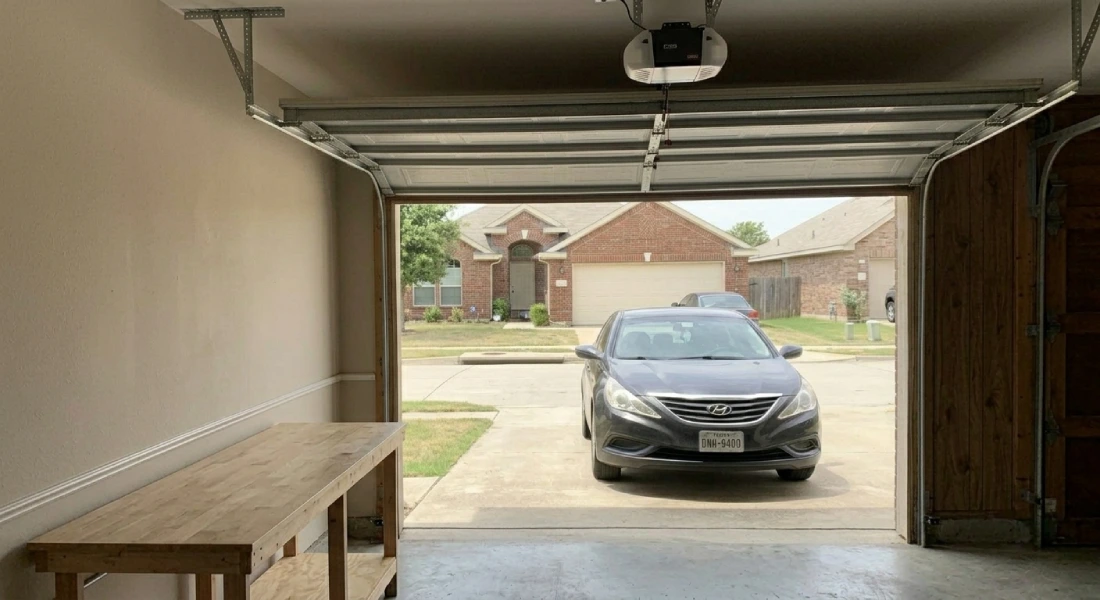


Why Is Your Garage Door in Dallas-Fort Worth Shaking When It Opens?
Most Dallas-Fort Worth homeowners notice a shaking garage door and assume it's normal wear. Just metal moving up and down. But that rattling isn't just noise — and if you ignore it, you're setting yourself up for bigger problems. A shaking door isn't just annoying. It's a sign something's failing. Especially if you're hearing grinding, seeing uneven movement, or watching the whole frame vibrate.
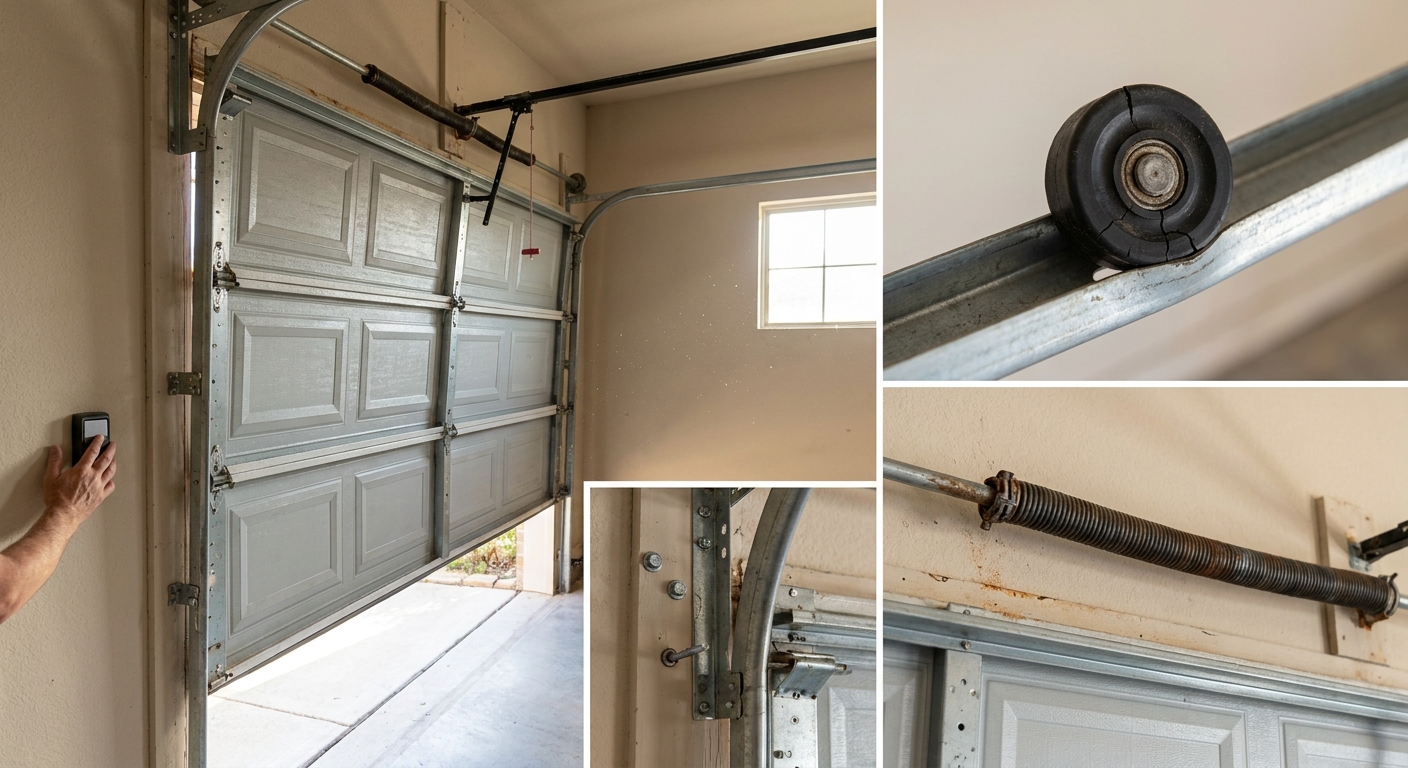
So here's the reality. If your door is trembling every time it opens, that's not something to live with. It's a signal. Every shake should be tracked down. Every loose component needs tightening. And every repair decision should be based on what's actually broken — not just what sounds loudest.
Rollers Break Down Faster Than You Think
Garage door rollers do one job — they keep the door gliding smoothly along the track. But over time, they crack, wear thin, or collect enough grime to turn rough. When that happens, the door doesn't glide anymore. It jerks. It shakes. And it puts stress on everything else in the system.
Metal rollers are loud by nature, but they also wear unevenly. Nylon rollers go quieter longer, but once they start splitting, the damage spreads fast. Either way, bad rollers mean a door that's rattling its way toward a full breakdown. And if you're in Dallas-Fort Worth, where heat and humidity swing hard, those rollers age faster than the manual suggests.
Tracks Don't Stay Aligned Forever
Your garage door tracks are supposed to hold the door steady as it moves. But if those tracks are bent, loose, or sitting at the wrong angle, the door won't run clean. It'll wobble. It'll shake. And eventually, it'll jam or come off completely.
Texas weather doesn't help. Metal expands in the heat and contracts in the cold. That cycle can warp tracks over time or loosen the bolts holding them in place. One bent section is all it takes to throw the whole door off balance. And once that happens, the shaking gets worse with every cycle.
Unbalanced Doors Put Stress on Everything
A garage door that's out of balance won't move evenly. One side lifts faster than the other. The motor works harder. The whole system vibrates under the strain. And that imbalance usually traces back to the springs.
Torsion springs are under constant tension, and they don't last forever. When one weakens or snaps, the door tips. The opener compensates. And the shaking starts. In Dallas-Fort Worth, where doors get used multiple times a day in fluctuating temps, garage door spring repair is common. If your door shakes and also feels heavy or lopssided, the springs are the first place to look.
Hardware Loosens With Every Cycle
Your garage door system is held together by bolts, brackets, and screws. Every time the door moves, those fasteners absorb vibration. Over time, they loosen. And when they do, the door rattles like it's coming apart — because it is.
Most homeowners don't check hardware until something falls off. But a quarterly walk-through with a wrench can catch loose bolts before they cause real damage. Tighten the brackets. Check the hinges. Make sure nothing's wiggling that shouldn't be. It's simple maintenance that prevents expensive repairs.
Opener Problems Show Up as Door Problems
Sometimes the door itself is fine — it's the opener that's failing. If the chain is loose, the belt is worn, or the rail is misaligned, the door will move unevenly. That uneven pull shows up as shaking, jerking, or stuttering motion.
Openers don't last forever. And when they start to go, they take the door down with them. Listen for grinding from the motor. Watch for hesitation when the door starts moving. And if the shaking only happens during opening or closing — not when you move the door manually — the garage door opener is the culprit.
Why Ignoring the Shake Costs More Later
A shaking garage door isn't just loud. It's damaging itself every time it moves. The vibration accelerates wear on every moving part. Rollers crack faster. Springs weaken sooner. Tracks bend under uneven pressure. What starts as a minor rattle becomes a major failure.
And then there's safety. A door that's shaking is a door that's unstable. If a spring snaps or the door jumps the track, you're looking at a multi-hundred-pound slab falling. That's a risk to people, cars, and anything else in the way. Plus, a compromised door is easier to force open, which means your home's less secure.
- Accelerated wear on all moving components
- Higher risk of sudden spring or cable failure
- Potential for the door to come off the tracks
- Increased likelihood of motor burnout
- Reduced security from a door that doesn't seal or lock properly
What You Can Check Yourself
Before calling a pro, there are a few things worth checking. Start with the tracks — clear out any dirt, leaves, or debris. Wipe them down and make sure nothing's blocking the path. Then grab a wrench and tighten any loose bolts or screws you can reach. Don't overtighten, just snug them up.
Next, lubricate the rollers, hinges, and tracks with a silicone-based spray. Avoid WD-40 — it attracts dust and gums up over time. Run the door a few cycles and watch how it moves. Does it tilt? Does one side lag behind? Does it shake in the same spot every time? Those clues tell you where the problem is.
- Clear debris from tracks and wipe them clean
- Tighten all visible bolts, brackets, and screws
- Apply silicone lubricant to rollers, hinges, and track joints
- Watch the door move and note where the shaking occurs
- Check for visible damage to springs, cables, or rollers
When DIY Stops Being Smart
If you spot broken springs, frayed cables, or serious track damage, stop. Don't try to fix it yourself. Springs are under extreme tension and can cause serious injury if they snap during a repair. Cables can whip. Doors can fall. This is the kind of work that requires tools, training, and experience.
A professional can diagnose the root cause, replace worn parts safely, and rebalance the door so it runs smooth again. They'll also catch issues you might miss — like a motor on its last legs or a sensor that's out of alignment. It's not just about stopping the shake. It's about making sure the system runs clean for the long haul.
- Broken or damaged torsion springs
- Frayed or snapped cables
- Severely bent or misaligned tracks
- Persistent shaking after basic maintenance
- Door that won't stay open or closed
Climate Makes It Worse Here
Dallas-Fort Worth weather is hard on garage doors. Summer heat expands metal. Winter cold contracts it. Humidity swells wood panels and rusts hardware. And the constant temperature swings mean your door's working overtime just to keep up.
That's why garage doors in this region need more frequent maintenance than doors in milder climates. What might last ten years in a stable environment might only last six or seven here. Regular inspections, seasonal lubrication, and quick repairs keep the system from breaking down when you need it most.
- Extreme heat causes metal expansion and warping
- Cold snaps make springs more brittle
- Humidity accelerates rust on tracks and hardware
- Temperature swings stress all moving components
- Frequent use compounds wear in high-traffic households
Track the Symptoms, Not Just the Sound
A shaking garage door is trying to tell you something. Maybe the rollers are shot. Maybe the springs are failing. Maybe the tracks are out of whack. Whatever it is, the sooner you address it, the less damage you'll deal with later.
We've seen too many homeowners wait until the door won't open at all — or worse, until it comes crashing down. That's when a $150 repair turns into a $1,500 replacement. Don't let a little vibration turn into a big problem. Pay attention. Tighten what's loose. Replace what's broken. And call in a pro when the issue goes beyond basic maintenance. Your garage door works hard — make sure it's in shape to keep working.
Let’s Get Your Garage Door Running Smooth Again
We know how frustrating a shaky garage door can be, and you shouldn’t have to put up with the noise or the risk. Let’s tackle those issues together and restore the smooth, quiet operation you expect. If you’re ready for expert help, give us a call at 303-902-8840 or book an appointment so we can get your garage door back on track.
‹ Back
Recent Posts
-
Why Is Your Garage Door in Dallas-Fort Worth Shaking When It Opens?
September 17, 2026
-
Should You Replace Both Garage Door Springs in Denver at Once?
September 3, 2026
-
Why Does Your Garage Door in Denver Close & Then Reopen?
August 20, 2026
-
Can You Open a Garage Door in Denver During a Power Outage?
August 6, 2026
-