


Is Your Garage Door in Dallas-Fort Worth Suddenly Getting Louder?
Most homeowners think a noisy garage door is just part of the deal. Metal on metal, springs doing their thing, nothing to worry about. But that grinding sound you're hearing? It's not normal. And if you're ignoring it, you're setting yourself up for a breakdown that could've been avoided. Garage doors don't just get louder for no reason — something's wearing down, coming loose, or about to fail.
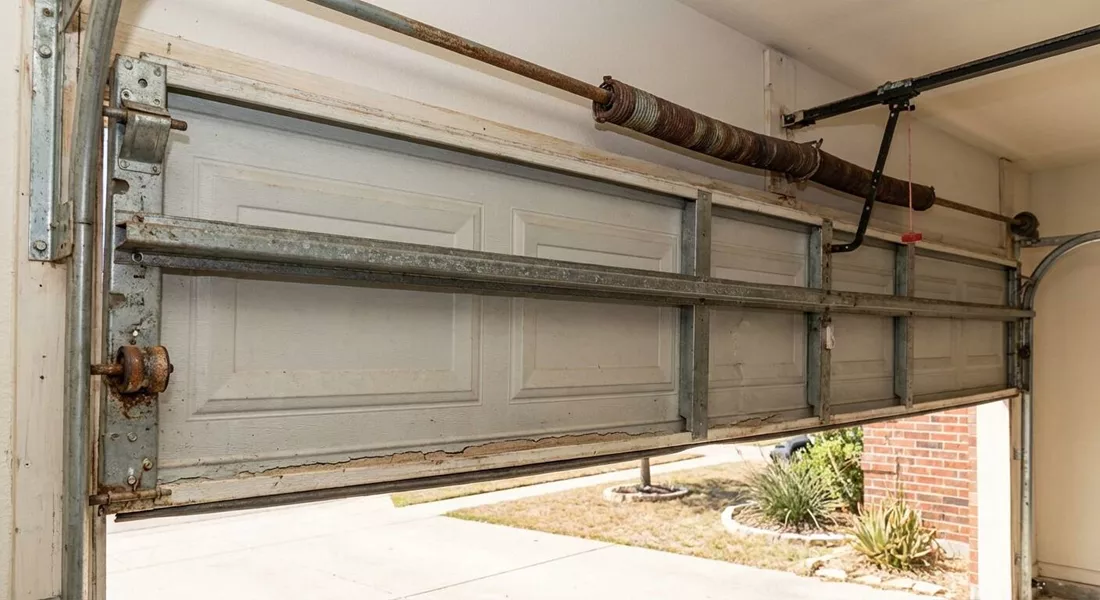
So here's what matters. If your door used to glide quietly and now it sounds like a freight train, that's a signal. Every rattle has a cause. Every screech points to a part that needs attention. And every day you wait is another day closer to a repair bill that could've been a simple fix.
When Noise Means Something's Breaking Down
Nine times out of ten, a loud garage door isn't just annoying — it's a symptom. You've got moving parts under constant tension, exposed to heat, humidity, and the kind of temperature swings Dallas-Fort Worth throws around like confetti. Metal expands. Hardware loosens. Lubricant dries out. And when those things happen, your door starts talking.
But if you're hearing banging or popping? That's different. That's usually a garage door spring issue, and springs don't give you a lot of warning before they snap. We've seen doors go from noisy to non-functional in a matter of days. And when a spring fails, you're not opening that door without help — professional help.
The Parts That Make the Most Racket
Your garage door has a lot of components, and each one can contribute to the noise. Some are easy fixes. Others require tools, experience, and a healthy respect for high-tension hardware.
Here's where the sound usually comes from:
- Rollers that have worn down or cracked, especially if they're the cheap metal kind that came with the original install
- Hinges that haven't seen lubricant in months or years, grinding every time the door moves
- Springs that are old, rusted, or starting to lose tension — these make the loudest and most alarming sounds
- Loose bolts and brackets that rattle with every cycle, especially near the opener or along the track
- Tracks that are bent, misaligned, or caked with dirt and debris from years of use
Weather in This Region Doesn't Help
Living in Dallas-Fort Worth means your garage door takes a beating. Summer heat makes metal expand. Winter cold makes it contract. Humidity sneaks in and starts the rust process. And those sudden storms? They shake everything loose.
All of that adds up. Parts that were fine six months ago are now struggling. Lubricant that worked last year has dried out or washed away. And if you're not staying on top of regular garage door maintenance, the noise is just the beginning. Eventually, something's going to give.
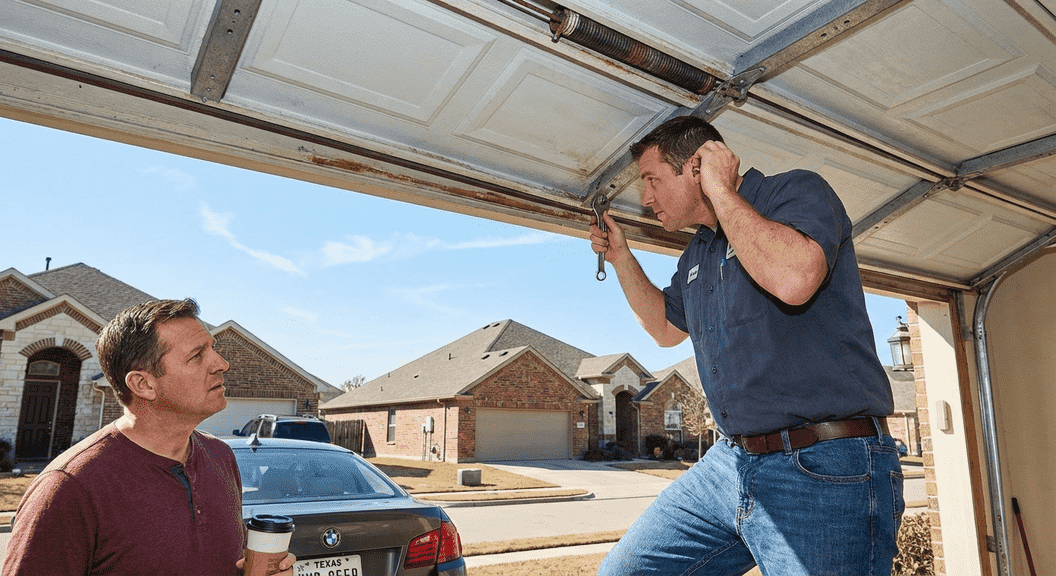
What We Do When the Door Gets Loud
Before calling anyone, there are a few things worth checking. Not every noise requires a service call, and some fixes take five minutes and a can of the right lubricant.
Start with these steps:
- Grab a wrench and tighten every bolt, bracket, and hinge you can reach — vibration loosens hardware faster than you'd think
- Apply a silicone-based garage door lubricant to rollers, hinges, and springs — skip the WD-40, it's not built for this
- Inspect the rollers for cracks, chips, or flat spots — if they're metal, consider swapping them for nylon
- Wipe down the tracks with a damp cloth and make sure they're aligned and free of debris
- Listen to the opener while the door moves — if the noise is coming from the motor, that's a different problem
When DIY Stops Being Smart
We're all for handling small fixes. But garage doors have limits, and so do homeowners. If you've tightened, lubricated, and cleaned everything and the noise is still there, it's time to bring in someone who knows what they're doing.
You'll also want a pro if you notice any of these red flags:
- The door jerks or shakes as it opens or closes
- You hear loud pops, bangs, or metal-on-metal grinding
- The door won't stay open or struggles to lift
- You suspect the springs are the issue — never try to replace these yourself
Keeping It Quiet Takes Consistency
The best way to avoid a noisy garage door is to stop problems before they start. That means regular maintenance, not just when something sounds off. Schedule an inspection once a year with a garage door repair company. Lubricate moving parts every few months. And pay attention when something changes.
Small issues turn into big ones when you ignore them. A loose bolt becomes a bent track. A dry hinge becomes a worn roller. And a worn roller becomes a door that won't open when you're already late for work.
Noise Is Just the Warning Shot
A loud garage door isn't the problem — it's the signal that a problem exists. And the longer you wait, the worse it gets. We've seen doors that could've been fixed with a tube of lubricant end up needing new springs, rollers, and tracks because the owner didn't act.
Don't let that be your story. If your garage door in Dallas-Fort Worth is suddenly louder, take it seriously. Check the basics, call a pro if needed, and keep up with garage door services so it doesn't happen again. Your door's trying to tell you something — and it's worth listening.
Let’s Get Your Garage Door Back to Quiet
We know how disruptive a noisy garage door can be, and you shouldn’t have to put up with it. Let’s work together to restore the peace and reliability you expect from your home. If you’re ready for a quieter, smoother garage door, give us a call at 817-973-5650 or book an appointment today and let’s get your door running right again.
‹ Back
Recent Posts
-
-
Why Is Your Garage Door in Dallas-Fort Worth Shaking When It Opens?
September 17, 2026
-
Should You Replace Both Garage Door Springs in Denver at Once?
September 3, 2026
-
Why Does Your Garage Door in Denver Close & Then Reopen?
August 20, 2026
-
Can You Open a Garage Door in Denver During a Power Outage?
August 6, 2026