


Why Does Your Garage Door in Denver Close & Then Reopen?
Your garage door hits the floor, then bounces right back up. It's not a feature — it's a malfunction. And if you're dealing with Denver weather, fluctuating temps, or debris blowing in from the mountains, you've got a few extra variables working against you. Most of the time, this reversal behavior isn't random. It's your opener doing exactly what it was programmed to do when something triggers a safety flag.
The trick is figuring out what set it off. Could be the sensors. Could be the tracks. Could be your settings, your springs, or just snow piling up in the wrong spot. Whatever it is, the door won't stay down until you fix the underlying cause — and guessing doesn't get you anywhere.
Sensors Are Usually the First Suspect
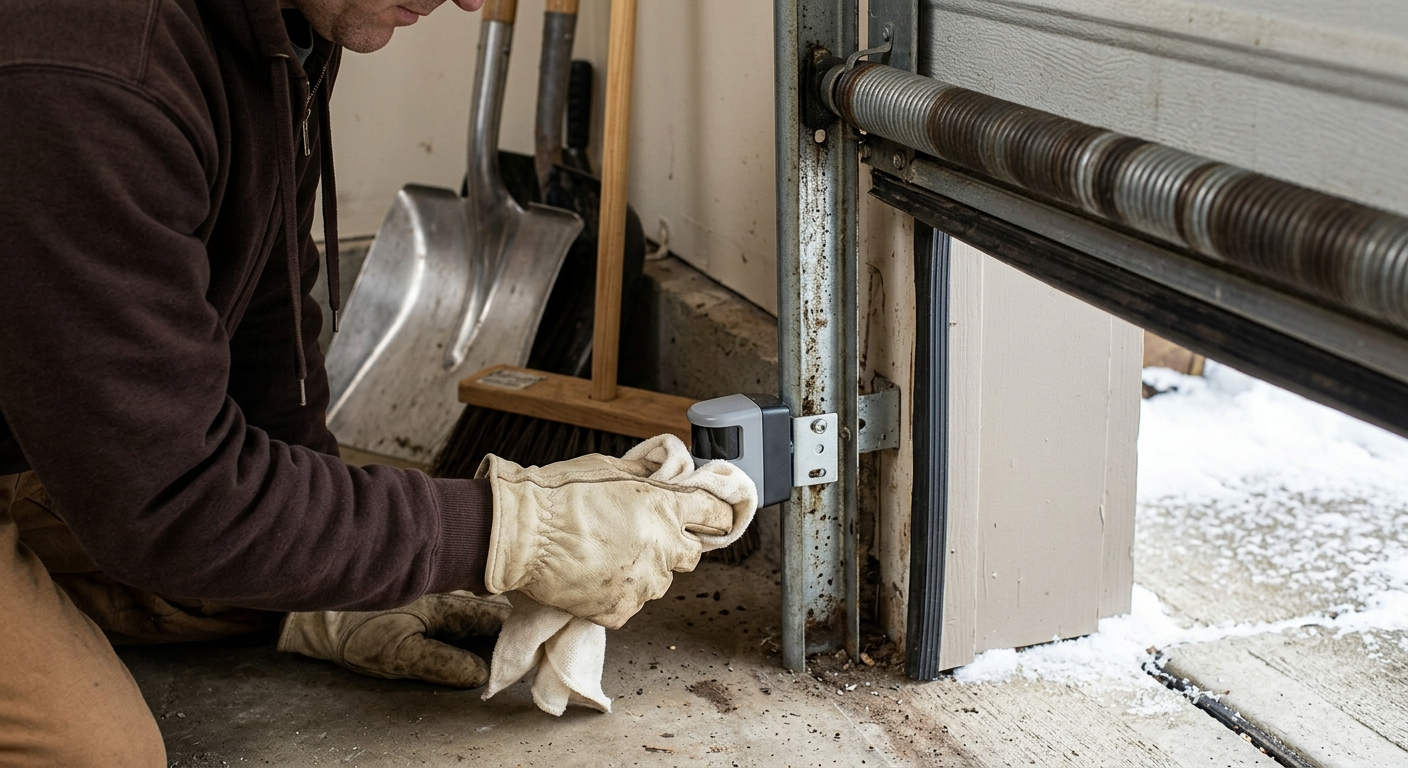
Most garage doors built in the last twenty years come with photoelectric eyes mounted near the ground on both sides of the track. Their job is simple: detect anything in the door's path and reverse before someone gets hurt. When those sensors get dirty, knocked out of alignment, or blocked by something you didn't notice, they treat it like an obstruction — even when there isn't one.
Denver's dry air kicks up dust. Fall brings leaves. Winter dumps snow. Any of that can land on a sensor lens or interrupt the beam. We've seen doors refuse to close because a spider built a web across the sensor housing. Clean the lenses with a soft cloth, make sure both units are aimed directly at each other, and confirm the indicator lights are solid. If one's blinking or off, that's your answer.
What to Check on Your Sensors
- Wipe down both sensor lenses with a dry or slightly damp cloth
- Check that nothing is blocking the invisible beam between them
- Verify both sensors show steady indicator lights, not blinking or dark
- Adjust the bracket angle if one sensor is pointed off-center
- Look for loose wiring or damage to the sensor housings
Track Problems Create Resistance
Your opener expects the door to travel smoothly from open to closed. When it hits unexpected friction or a hard stop, the motor senses resistance and reverses to protect the mechanism. That resistance usually comes from something lodged in the track or a bent section of metal that's forcing the rollers to fight their way down.
Run your eyes along both tracks from top to bottom. Pull out any pebbles, sticks, or chunks of ice wedged inside. If you see a dent or a section that's visibly warped, that's enough to trigger a reversal. Minor bends can sometimes be tapped back into place, but serious damage means calling in a tech to realign or replace the track before you wreck the rollers or the opener itself.
Track Inspection Points
- Remove any visible debris, dirt, or ice buildup from the inside channel
- Look for dents, bends, or sections that don't run parallel to each other
- Check that the rollers move freely without catching or grinding
- Confirm the tracks are securely mounted to the wall and ceiling brackets
- Listen for unusual scraping or rattling noises during operation
Limit Settings Tell the Opener When to Stop
Every garage door opener has adjustable limit controls — one for how far the door travels up, one for how far it goes down. If the down-limit is set too high, the opener thinks the door touched the ground before it actually did. When it doesn't feel the door make contact, it assumes something's in the way and reverses.
This happens a lot after someone replaces an opener, adjusts the spring tension, or messes with the settings without documenting what they changed. Your owner's manual will show you where the limit dials or buttons are located. Small tweaks can make a big difference — sometimes a quarter turn is all it takes to get the door closing flush with the floor and staying there.
How to Adjust Your Limits
- Locate the limit adjustment controls on the opener unit, usually labeled "up" and "down"
- Close the door manually and note whether it sits flush with the ground
- Turn the down-limit dial or screw in small increments, testing after each adjustment
- Stop once the door closes completely and the opener disengages without reversing
- Document your final settings so you can return to them if needed
Broken Springs Change the Game
Garage door springs counterbalance the weight of the door so the opener doesn't have to do all the work. When a spring breaks or loses tension, the door becomes heavier than the opener expects. That extra weight can cause the motor to strain, overheat, or misread the situation and reverse the door thinking it hit an obstacle.
Broken springs are dangerous. They're under extreme tension and can cause serious injury if you try to replace them without the right tools and training. If you manually lift your door and it feels significantly heavier than usual, or if you see a visible gap in one of the springs, don't touch it. Call a garage door spring repair professional in Denver and let them handle the replacement safely.
Denver Weather Throws Curveballs
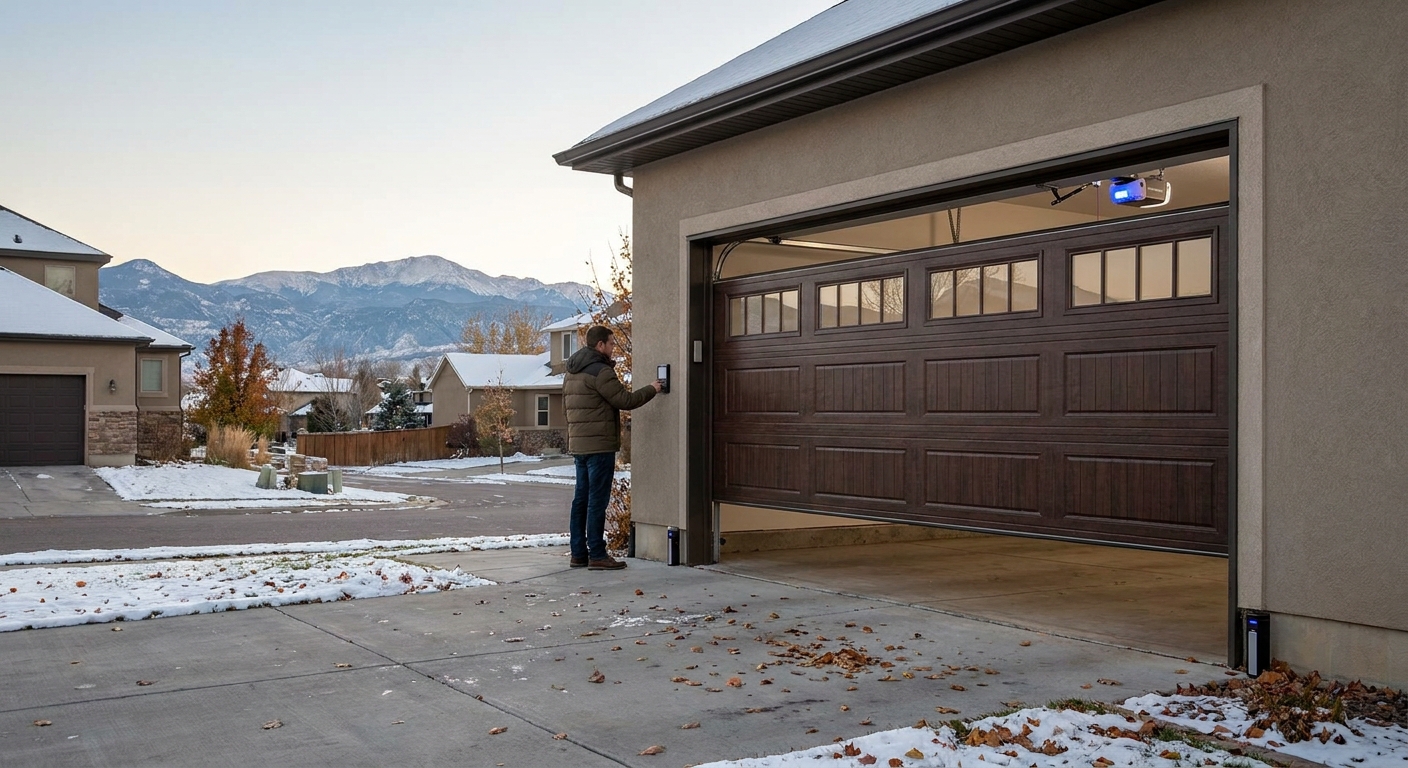
Temperature swings mess with metal components. A door that works fine in July might stick in January when the tracks contract and the lubricant thickens. Ice can form along the bottom seal, gluing the door to the concrete. Snow can pile up in front of the sensors or block the door's path entirely. All of that can trigger a reversal or prevent the door from closing in the first place.
We see this spike every winter. Homeowners wake up, hit the button, and watch their door yo-yo up and down until they clear the ice or snow. Keep a broom or shovel handy near the garage, and make it a habit to check the door's path and sensor area during storm season. Understanding how weather affects garage doors beats a service call.
Cold Weather Maintenance Tips
- Clear snow and ice away from the door's base and sensor housings
- Apply cold-weather lubricant to tracks, rollers, and hinges before winter hits
- Check the weather seal at the bottom for cracks or ice buildup
- Let the door warm up slightly before operating if temps drop below freezing
- Keep a scraper or de-icer spray in the garage for quick fixes
Electrical Gremlins Are Rare but Real
Sometimes the problem isn't mechanical — it's in the wiring. Loose connections, frayed wires, or a power surge can scramble the signals between your wall button, remote, and opener. Denver gets its share of lightning storms, and those surges can fry delicate circuit boards or cause the opener to behave unpredictably.
If your door reverses inconsistently, or if the opener lights flicker or the motor hums without moving, you might be looking at an electrical fault. Don't start poking around live wiring unless you know what you're doing. Bring in someone who can test the circuits, check the logic board, and replace any damaged components without creating a bigger hazard.
When the Fix Is Just a Button
We've driven out to jobs where the entire problem was a stuck wall button or a remote control with a jammed transmit key. If the button stays pressed, it sends a continuous signal to the opener, which interprets that as multiple open-close commands. The door goes down, the signal says "open," and up it goes again.
Pop the cover off your wall button and make sure nothing's wedged behind it. Check your remote for sticky buttons or corrosion from a leaking battery. Swap in fresh batteries and test again. Sometimes the simplest explanation is the right one — and the cheapest fix you'll ever make.
Stop Guessing and Start Documenting
Garage door problems don't fix themselves, and they don't get better with age. The longer you let a door reverse on every attempt, the more wear you're putting on the opener motor, the drive belt, and the safety mechanisms. Eventually, something's going to burn out or break — and that repair will cost more than addressing the root cause today.
Walk through the checklist methodically. Clean the sensors. Inspect the tracks. Adjust the limits. Test the springs. Clear the weather debris. If you've done all that and the door still won't stay down, it's time to call in a garage door repair tech in Denver who knows Denver's climate and the quirks that come with it. We provide professional garage door services to help homeowners solve these issues every day — not by guessing, but by isolating the variable that's throwing the system off and fixing it right the first time.
Let’s Get Your Garage Door Working Right
We know how frustrating it is when your garage door refuses to cooperate, especially with Denver’s unpredictable weather. Let’s put an end to the guesswork and get your door closing smoothly again. If you’re ready for reliable help, give us a call at 303-902-8840 or book an appointment so we can get your garage door back on track without the hassle.
‹ Back
Recent Posts
-
-
Why Is Your Garage Door in Dallas-Fort Worth Shaking When It Opens?
September 17, 2026
-
Should You Replace Both Garage Door Springs in Denver at Once?
September 3, 2026
-
Why Does Your Garage Door in Denver Close & Then Reopen?
August 20, 2026
-
Can You Open a Garage Door in Denver During a Power Outage?
August 6, 2026