

Why Is My Garage Door in Denver Crooked When It Closes?
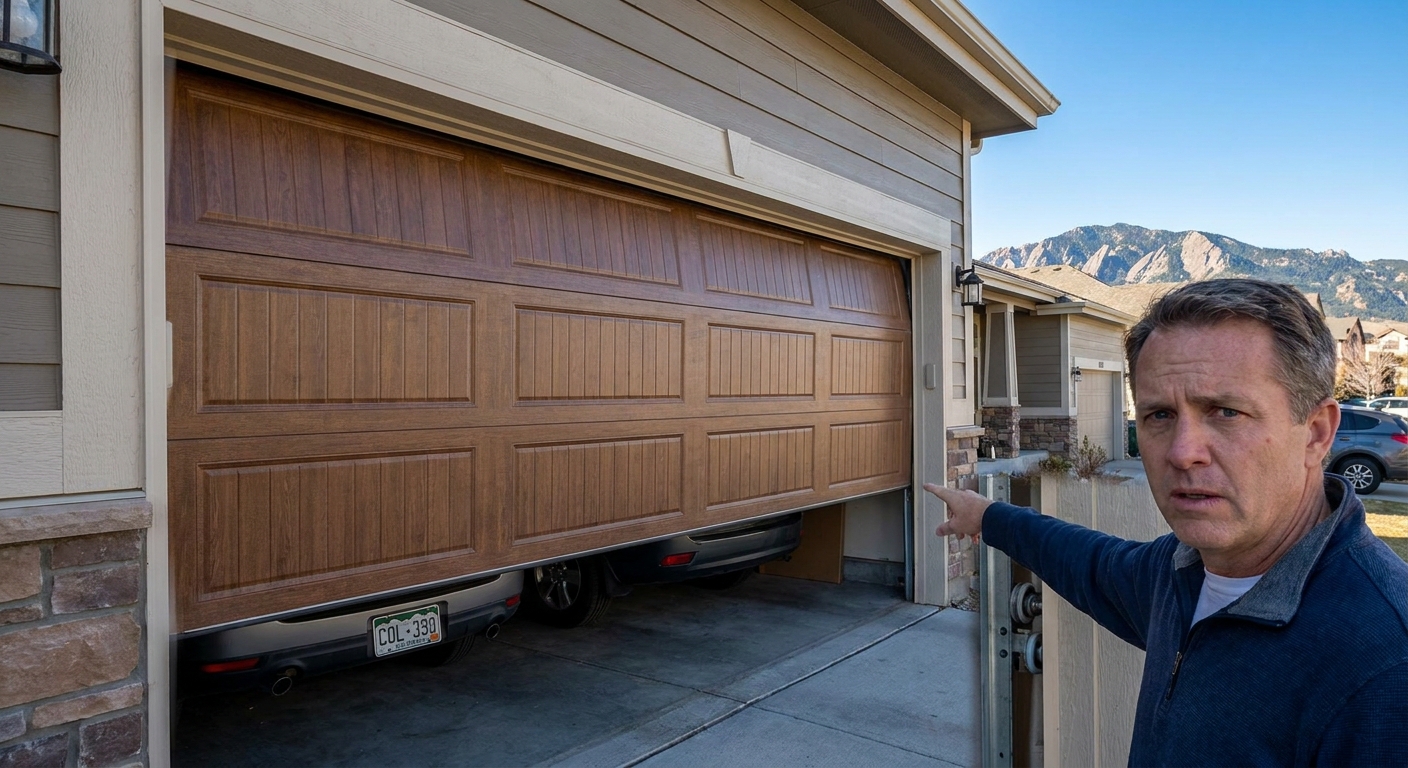
Most homeowners think a crooked garage door is just an annoyance. A little off-kilter, maybe an eyesore. But what you're seeing at the bottom of that door is actually a symptom—and if you ignore it, you're setting yourself up for bigger problems. A garage door that closes unevenly doesn't just look bad. It puts stress on every moving part, from the opener to the springs to the tracks. And in Denver, where temperature swings and soil shifts are part of the deal, that stress compounds fast.
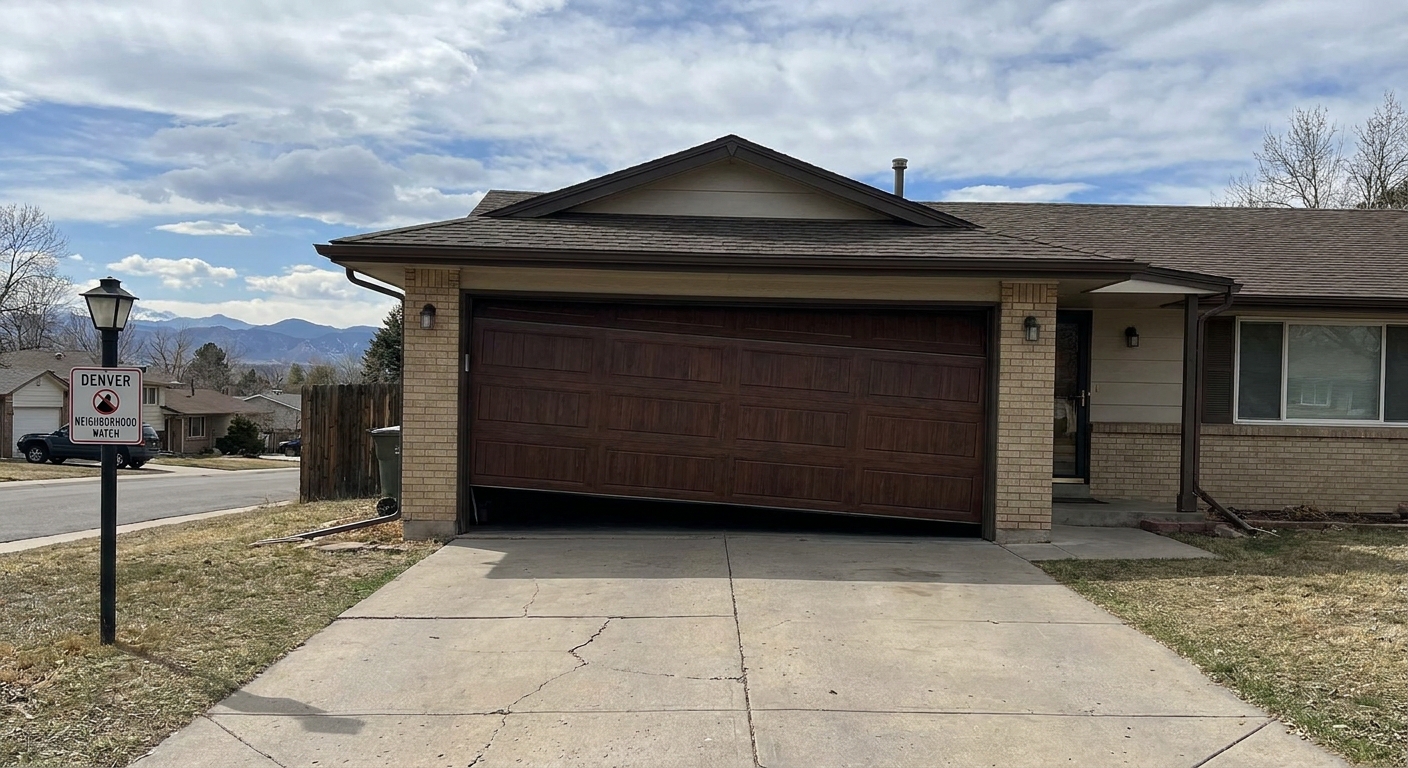
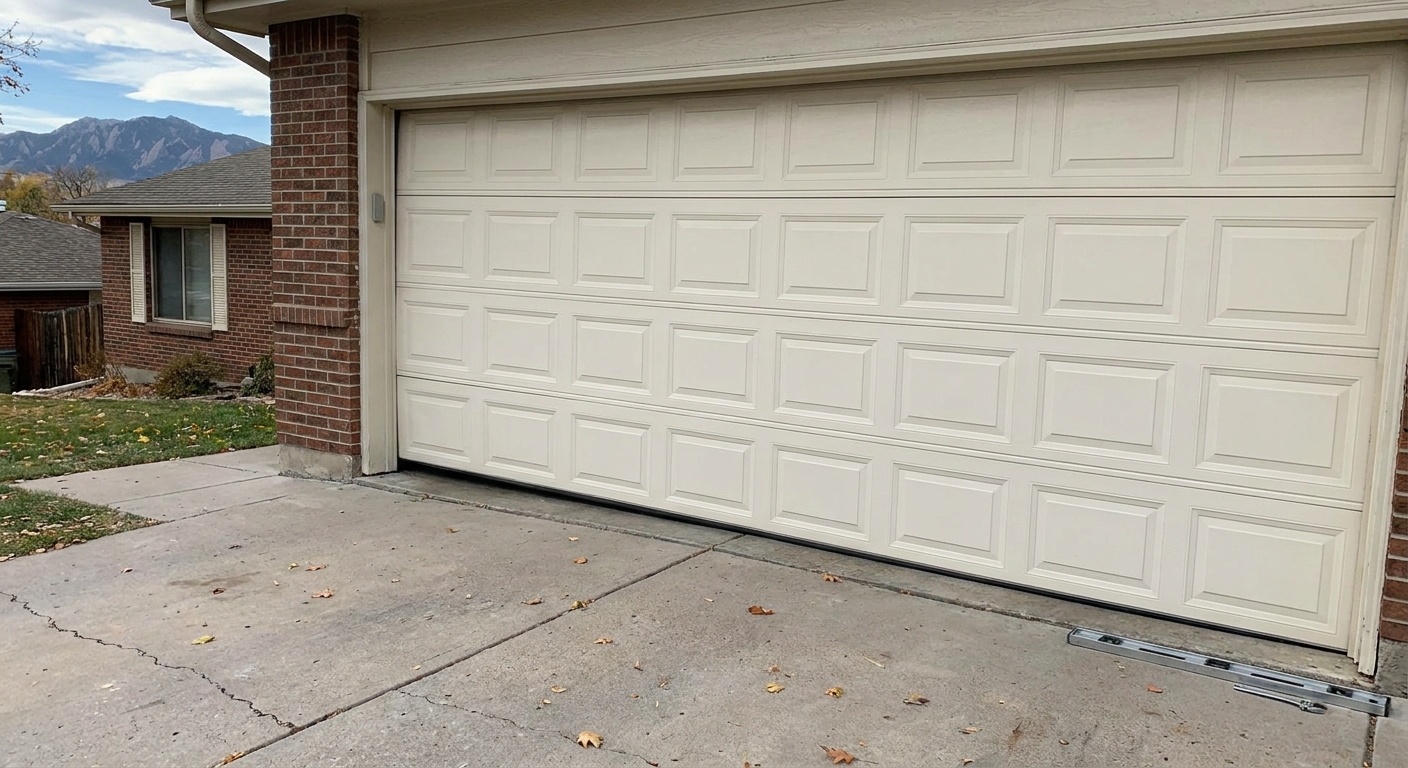
So here's what matters. If your door isn't closing level, something's already broken, bent, or out of alignment. Every time you hit that button, you're making it worse. The fix might be simple today. Wait a month, and you could be looking at a full replacement. Understanding what's causing the problem—and acting on it—is the difference between a quick tune-up and a garage door repair in Denver.
Springs Don't Break Evenly
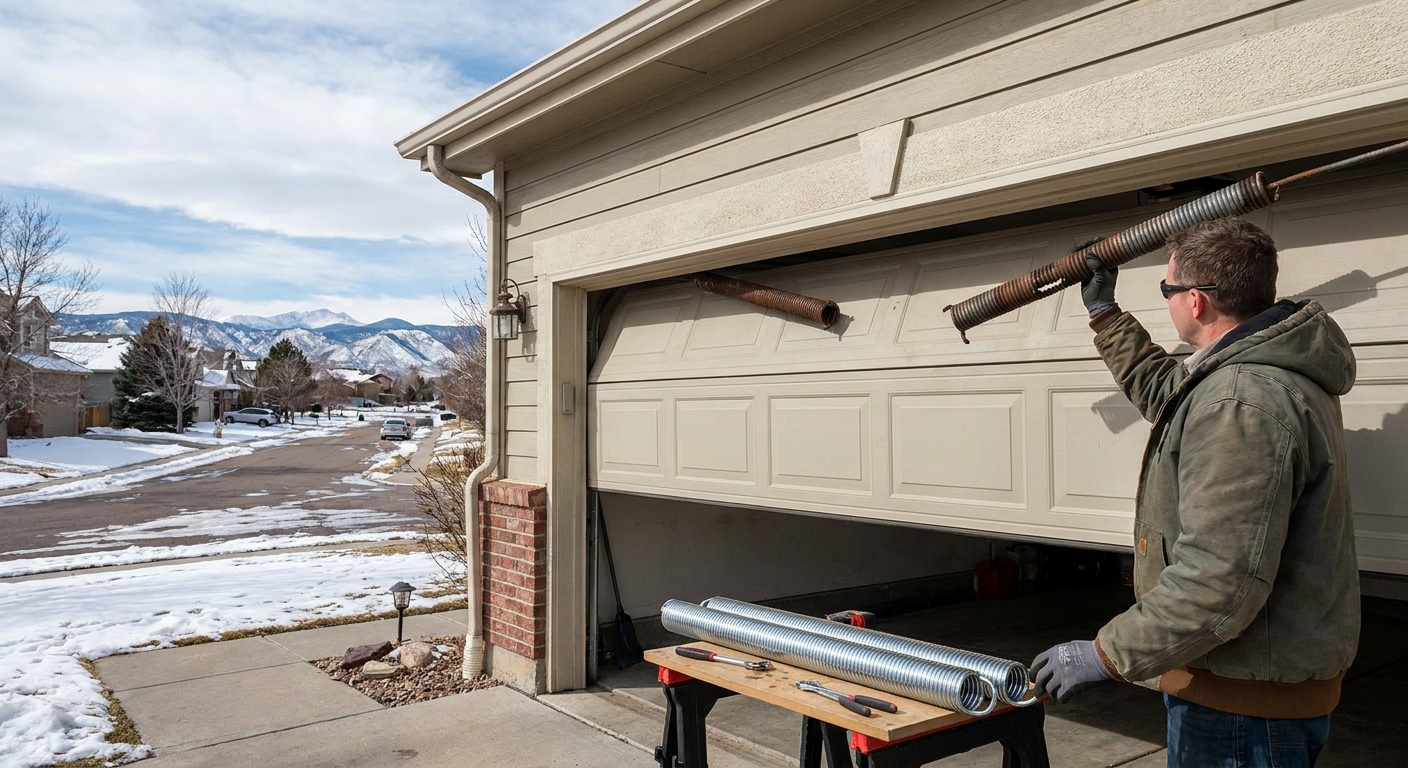
Your garage door relies on a pair of torsion springs to do the heavy lifting. When one of those springs loses tension or snaps outright, the door loses balance. One side drops lower than the other, and you get that crooked close. It's not always obvious from the outside, but if you look at the springs above the door, you might see a gap or uneven coil spacing. That's your red flag.
Denver's climate accelerates this wear. Cold nights contract the metal. Hot afternoons expand it. Over time, that back-and-forth weakens the coil until it gives out. Most springs last around seven to ten thousand cycles—but if your door's working overtime in extreme temps, that lifespan shrinks. And when one spring goes, the other isn't far behind. Professional garage door spring repair can address this before complete failure occurs.
Tracks Take the Hit
The metal tracks on either side of your door are supposed to be perfectly vertical and aligned. But a bump from a car, a shift in the foundation, or just years of vibration can knock them out of place. When that happens, the door can't roll smoothly. It stutters, drags, or tilts as it closes.
You'll want to check for visible bends, dents, or gaps between the track and the wall. Sometimes it's just a loose bracket. Other times, the track itself is warped. Either way, a misaligned track puts uneven pressure on the rollers and cables, which can snowball into bigger failures if you don't address it. Dirt and debris buildup inside the track can mimic this issue, so a quick cleaning is worth trying before you assume structural damage.
Cables Snap Without Warning
Garage door cables work alongside the springs to control the door's movement. If a cable frays or breaks, one side of the door loses support. The result? A lopsided close that gets worse every time you use it. Cables don't always give you advance notice—they can go from fine to broken in a single cycle.
Inspect the cables running along the sides of your door. Look for rust, kinks, or fraying strands. If you see any of that, don't run the door again. A broken cable can whip violently when it snaps, and it can also cause the door to fall unexpectedly. This is one repair you don't DIY. Call someone who knows what they're doing, because the tension involved is no joke.
Foundation Shifts Throw Everything Off
Denver sits on expansive clay soil, which swells when wet and contracts when dry. That movement can shift your home's foundation—even just a fraction of an inch—and that's enough to throw off your garage door's alignment. The tracks, which are mounted to the wall or ceiling, move with the structure. If the foundation tilts, so do the tracks.
You might not notice the shift at first. But over months or years, that slight tilt becomes a crooked door. This is especially common in older homes or neighborhoods with poor drainage. If you suspect foundation movement, look for cracks in the drywall, sticking doors inside the house, or uneven floors. Those are signs the problem goes beyond the garage door itself.
What You Should Check First
Before you call anyone, do a quick visual sweep. You might spot something obvious that saves you a service call. Walk through these steps and see what you find.
- Look at both tracks from the inside. Are they parallel? Any visible bends or obstructions?
- Check the springs above the door. Do they look symmetrical, or is one visibly broken or slack?
- Inspect the cables. Any fraying, rust, or loose connections?
- Watch the door as it closes. Does it move smoothly, or does it jerk and drag on one side?
- Listen for unusual sounds—grinding, scraping, or popping can all point to specific component failures.
When DIY Becomes Dangerous
Some garage door issues are easy fixes. Others will hurt you if you try. Springs and cables are under serious tension, and releasing that tension without the right tools or training can lead to injuries. We're talking broken bones, lacerations, or worse. If you see a broken spring or snapped cable, stop using the door and call a professional.
Even adjusting the tracks can be tricky. If you loosen the wrong bolt, the door can shift unexpectedly. And if you're working on a door that's already unbalanced, you're adding risk every time you touch it. Save the YouTube tutorials for something less dangerous. This is one area where experience matters more than confidence.
Maintenance Stops Problems Before They Start
Most crooked door issues are preventable. A little routine care goes a long way, especially in a climate that's tough on mechanical systems. Set a schedule and stick to it—this isn't the kind of thing you want to forget about until something breaks. Regular garage door maintenance helps identify issues early.
- Lubricate the springs, rollers, and hinges every few months with garage door-specific lubricant.
- Tighten loose bolts and brackets before they cause alignment issues.
- Clean the tracks to remove dirt, grease, and debris that can interfere with smooth operation.
- Test the door's balance by disconnecting the opener and manually lifting it halfway—it should stay in place.
- Inspect weatherstripping and seals to keep out moisture and pests, which can contribute to rust and wear.
Local Pros Know Denver's Quirks
Not all garage door companies understand how Denver's environment impacts your door. A tech from out of state might not think twice about soil movement or rapid temperature swings. But a local pro has seen it all—foundation shifts, spring failures from cold snaps, track warping from intense sun exposure.
When you hire someone who works in Denver year-round, you're getting someone who knows what to look for and how to fix it for the long term. They'll account for the altitude, the dryness, the freeze-thaw cycles. And they'll recommend solutions that hold up in this specific climate, not just in theory. Choosing the right Denver garage door service makes all the difference.
What Happens If You Wait
Ignoring a crooked garage door doesn't make it go away. It makes it worse. The uneven pressure wears out the opener motor, frays the cables faster, and can crack the door panels themselves. Eventually, something catastrophic gives out—and when it does, you're looking at a much bigger bill.
Plus, a crooked door doesn't seal properly. That means drafts, moisture intrusion, and gaps that let in rodents and insects. In winter, that's wasted energy. In summer, it's extra heat. Either way, you're paying for it on your utility bill while waiting for the real repair to become unavoidable. Understanding the consequences of ignoring garage door repairs should motivate prompt action.
Get It Fixed Before It Gets Expensive
A crooked garage door in Denver isn't something to put off. Whether it's a spring, a track, a cable, or the foundation itself, the cause won't resolve on its own. Every cycle you run that door, you're compounding the damage. The smart move is to call someone who knows what they're doing, get a proper diagnosis, and handle it while it's still manageable. Waiting just turns a fixable issue into a full-blown failure—and nobody wants to deal with that on a February morning when the door won't close at all.
Let’s Keep Your Garage Door Working Right
We know how quickly a small garage door issue can turn into a major headache, especially with Denver’s unpredictable weather. Let’s make sure your door is safe, smooth, and reliable for the long haul. If you’re ready to get things back on track, give us a call at 303-902-8840 or Book An Appointment today—we’re here to help you keep your garage door running like it should.
‹ Back
Recent Posts
-
-
Why Is Your Garage Door in Dallas-Fort Worth Shaking When It Opens?
September 17, 2026
-
Should You Replace Both Garage Door Springs in Denver at Once?
September 3, 2026
-
Why Does Your Garage Door in Denver Close & Then Reopen?
August 20, 2026
-
Can You Open a Garage Door in Denver During a Power Outage?
August 6, 2026