


What Causes Garage Door Openers in Denver to Fail?
Most homeowners think garage door openers just open doors. Push a button, the door lifts. Simple. But these systems carry more stress than you'd guess — especially in Denver. Between wild temperature swings, electrical hiccups, and the kind of neglect that sneaks up on everyone, openers fail for reasons that go way beyond bad luck. If yours has been acting sketchy or quit altogether, you're not looking at a mystery. You're looking at a pattern.
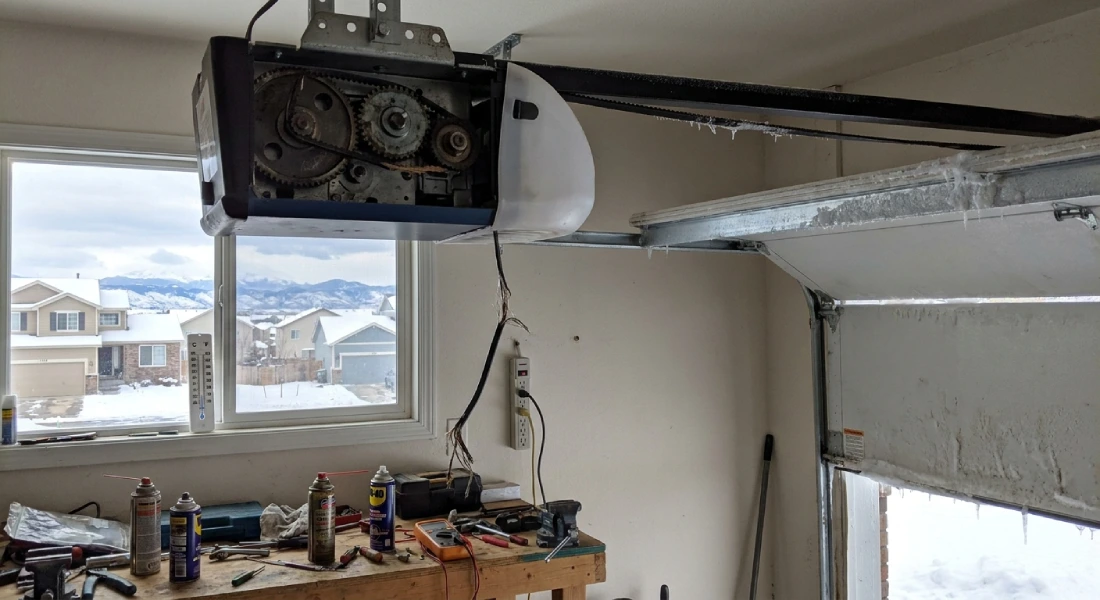
We've seen it play out a thousand times. The opener that worked fine all summer suddenly grinds to a halt in January. The one that seemed bulletproof starts reversing mid-close for no reason. And the homeowner who thought maintenance was optional? They're calling us on a Saturday morning. Understanding what actually kills these machines gives you the advantage — and saves you from emergency service fees when it's ten degrees outside.
Temperature Swings Hit Harder Than You Think
Denver doesn't do mild. One day it's seventy, the next it's snowing. That kind of volatility wreaks havoc on garage door openers because metal contracts when it's cold and expands when it's warm. The chain or belt that was perfectly tensioned last week? Now it's too tight or too loose. The gears that meshed smoothly in August are grinding in December. And when those components fight each other, something gives.
Cold weather also thickens lubricant or dries it out completely, depending on what you used. That means more friction, more strain on the motor, and a shorter lifespan for every moving part. Combine that with ice buildup around the door itself, and your opener is trying to lift what feels like a boulder. It's not built for that kind of punishment day after day.
Power Problems You Can't Always See
Lightning storms and grid fluctuations are common here. When a surge hits, it doesn't just flicker your lights — it fries circuit boards. The logic board inside your opener is sensitive. One spike can scramble its programming or kill it outright. We've pulled openers that looked fine on the outside but had fried internals from a storm that happened two weeks prior.
Even smaller electrical hiccups add up. Voltage drops, brownouts, and power cycling all stress the system. Most people don't think to plug their opener into a surge protector, but that one step could save hundreds in replacement costs. If your opener's been acting erratic after a storm, check the power situation before you assume it's the motor.
Skipping Maintenance Costs More Later
Nobody schedules garage door opener checkups. We get it. But dust, dirt, and debris pile up on tracks and sensors faster than you'd think. When those sensors get coated, they throw false readings. The door won't close, or it reverses randomly, and homeowners start blaming the remote or the wiring when the real issue is a dirty photoelectric eye.
Lubrication isn't optional either. Denver's dry air accelerates wear on chains, belts, and screws. If you're not hitting those parts with the right lubricant every few months, friction builds. The motor works harder. Components wear faster. And one day, the opener just stops. Regular garage door maintenance takes ten minutes and extends the life of your system by years.
Parts Wear Out Faster in This Climate
Freeze-thaw cycles are brutal on mechanical systems. Springs lose tension, belts fray, gears crack. When one part fails, it usually takes others with it because the opener compensates by overworking what's left. A worn drive gear forces the motor to strain. A stretched belt causes the trolley to slip. And a broken spring? That turns your opener into dead weight.
Here's what fails most often:
- Drive gears that crack under repetitive stress
- Belts and chains that stretch or snap
- Springs that lose tension and make the door too heavy
- Motor capacitors that burn out from overuse
- Trolley assemblies that wear through plastic components
Catching these issues early means swapping a part, not replacing the whole unit. But most people wait until the system's completely dead, and by then, the damage is done.
Sensors Go Haywire When They're Ignored
Safety sensors are supposed to stop the door from closing if something's in the way. But when snow, dirt, or even spiderwebs block those sensors, they malfunction. The door won't close at all, or it closes partway and reverses. Homeowners assume it's a bigger problem when really, it just needs a wipe-down.
Misalignment is another common culprit. If a sensor gets bumped or shifts over time, it won't line up with its partner. That breaks the signal, and the opener thinks there's an obstruction. A quick realignment fixes it, but if you don't know what to look for, you'll chase the wrong problem for weeks. Professional help with garage door sensor issues in Denver can resolve alignment problems quickly.
Remote and Signal Issues Happen More Than You'd Guess
Radio signals aren't foolproof. In dense neighborhoods or near airports, interference can disrupt communication between your remote and the opener. WiFi routers, baby monitors, and even certain LED bulbs can mess with the frequency. When your remote works sporadically, it's usually not the opener — it's the environment.
Dead batteries are the easiest fix, but people overlook them. If reprogramming the remote doesn't work and the batteries are fresh, check for interference. Moving your router or replacing cheap LED bulbs can sometimes solve the problem. If none of that works, the receiver in the opener itself might be failing.
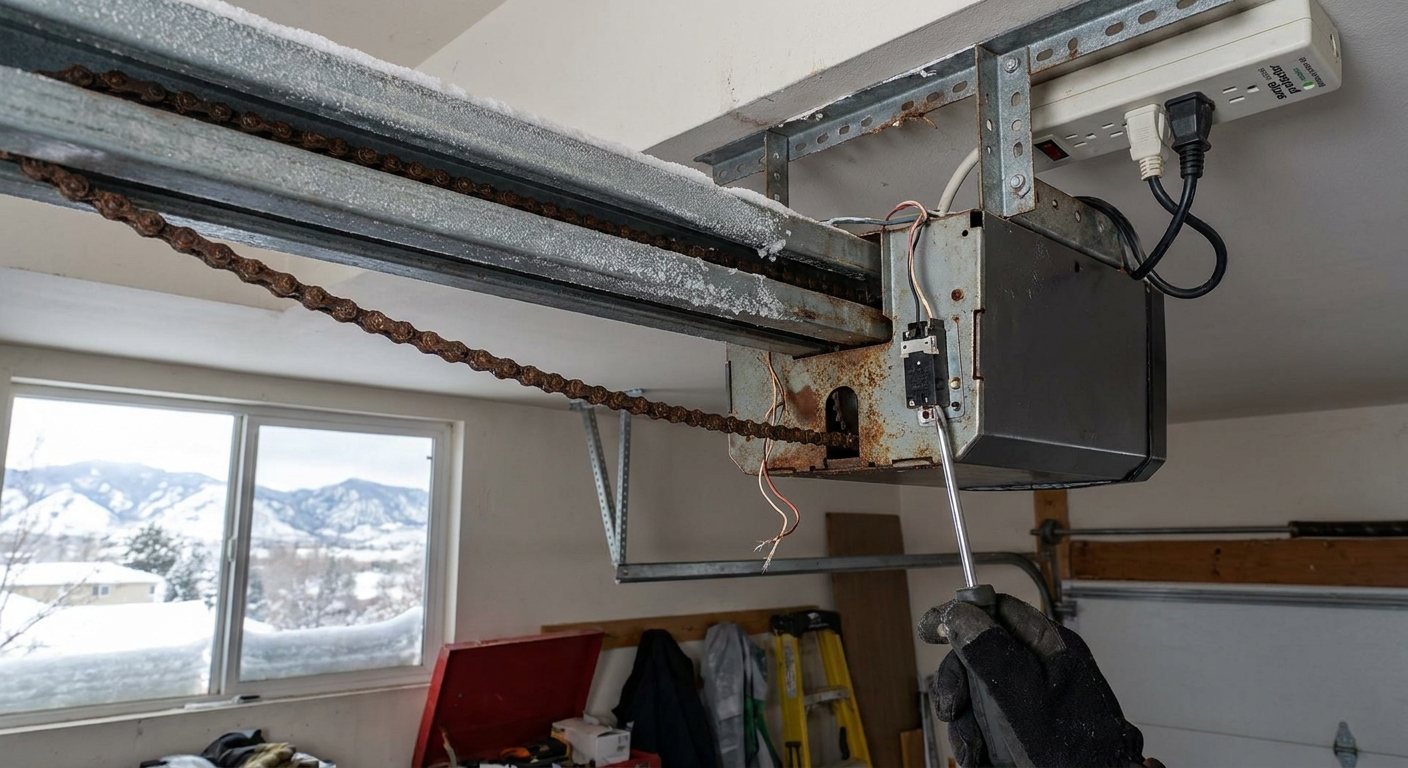
Installation Mistakes Show Up Over Time
Not every opener is installed correctly. If the mounting isn't level, the chain isn't tensioned right, or the safety sensors weren't aligned properly from the start, problems compound. Denver homes sometimes have non-standard garage dimensions or unusual door weights, and a cookie-cutter install doesn't account for that.
When installation is off, here's what happens:
- The motor strains because the door isn't balanced
- The chain or belt wears unevenly
- The trolley binds or skips
- Sensors fail to communicate consistently
- The door doesn't seal properly, letting in cold air and moisture
Professional installation isn't just about making it work today. It's about making it last without constant tweaks and repairs. Choosing garage door installation in Denver with experienced technicians ensures proper alignment and balance from the start.
Age Catches Up Eventually
Openers aren't immortal. Most last ten to fifteen years if they're maintained. In Denver's climate, that window shrinks if the system isn't cared for. When an opener's pushing twelve years old and starts showing symptoms, it's often smarter to replace than repair. The motor's tired, the parts are outdated, and finding replacements gets harder every year.
If yours is making new noises, slowing down, or requiring constant resets, don't throw money at endless repairs. Compare the cost of a new opener against another year of Band-Aids. Usually, the math favors replacement — and you get a quieter, more efficient system in the process.
What to Watch For
Catching problems early saves headaches and money. If your opener's doing any of these, it's time to act:
- Grinding or straining sounds when operating
- Door reverses randomly without obstruction
- Remote works inconsistently or not at all
- Door opens or closes slower than usual
- Motor runs but door doesn't move
These aren't quirks. They're warnings. Ignore them, and you're looking at a bigger repair — or a total failure at the worst possible time.
Prevention Beats Panic
We recommend a few simple habits that keep openers running longer:
- Lubricate moving parts every three months
- Clean sensors and check alignment twice a year
- Test the door balance by disconnecting the opener and lifting manually
- Replace remote batteries annually, even if they seem fine
- Use a surge protector to shield electronics from power spikes
None of this takes long, and it's all cheaper than an emergency service call.
When to Call Someone Who Knows
If your opener's beyond basic maintenance or you're not sure what's wrong, don't guess. A qualified tech can diagnose the issue, replace worn parts, and tell you whether repair or replacement makes more sense. They'll also spot problems you wouldn't notice — like a misaligned track or a failing capacitor — before they turn into bigger failures.
Professional help costs less than trial-and-error. And it definitely costs less than replacing an opener that could've been saved with a simple fix. For comprehensive support, consider professional opener services to keep your system running smoothly.
Failure Isn't Random
Garage door openers don't just quit for no reason. Denver's climate pushes them harder than most places, but the patterns are clear. Temperature swings, power surges, neglected maintenance, worn components, and installation errors all shorten the lifespan. The good news? Most of these issues are preventable. Keep up with basic care, protect your electronics, and address small problems before they cascade. Do that, and your opener will outlast the warranty — and save you from standing in the driveway at six in the morning, holding a broken remote, wondering what went wrong.
Let’s Keep Your Garage Door Opener Reliable
We know how frustrating it is when your garage door opener lets you down, especially with Denver’s unpredictable weather. Let’s work together to keep your system running smoothly year-round—no surprises, no last-minute emergencies. If you’re ready for expert help or just want peace of mind, give us a call at 303-902-8840 or book an appointment and we’ll make sure your garage door opener is ready for whatever Colorado throws your way.
‹ Back
Recent Posts
-
-
-
Why Is Your Garage Door in Dallas-Fort Worth Shaking When It Opens?
September 17, 2026
-
Should You Replace Both Garage Door Springs in Denver at Once?
September 3, 2026
-
Why Does Your Garage Door in Denver Close & Then Reopen?
August 20, 2026