


Can a Damaged Garage Door Panel in Dallas-Fort Worth Be Repaired?
Most homeowners think a dented garage door panel is just an eyesore. Surface-level stuff. But the truth is, that dent could be telling you something bigger — especially if it's compromising the door's operation or letting weather in. Panels might look cosmetic, but they play a structural role. And in Dallas-Fort Worth, where hail, wind, and the occasional vehicle mishap are part of the landscape, ignoring the damage means asking for bigger problems down the line.
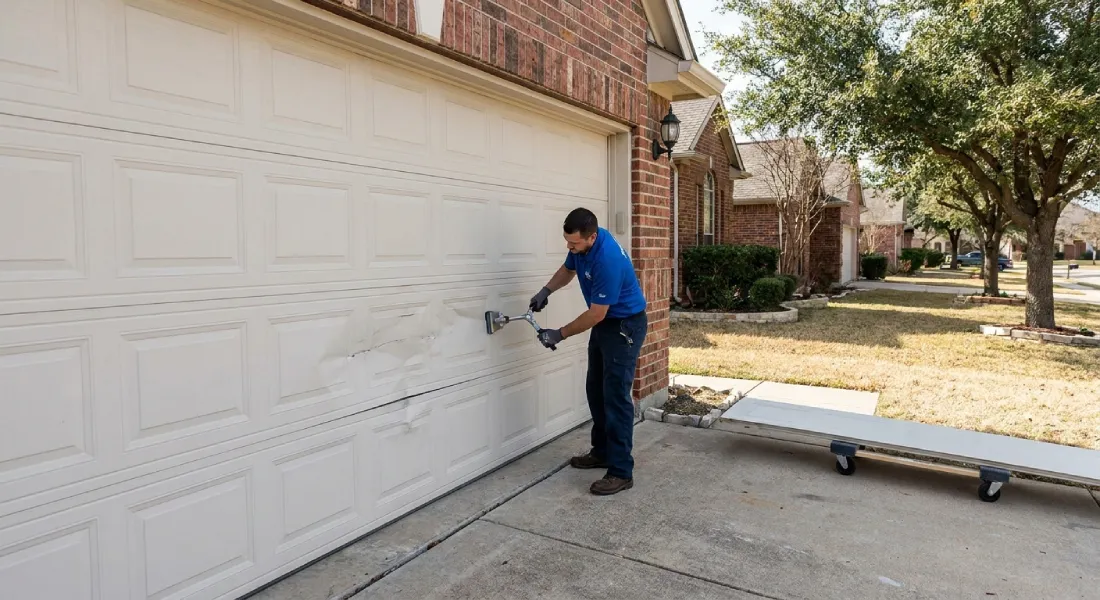
So here's the reality. If the panel took a hit but still functions and holds its shape, repair might be on the table. Just don't assume every crack or buckle can be patched up and forgotten. Every panel has a threshold. Every repair has limits. And every decision should be based on how the door operates now — not just how it looked before the damage.
Most Damage Doesn't Mean Total Replacement
Nine times out of ten, a single damaged panel doesn't require tearing out the entire door. You've got a shallow dent, a scrape from backing out too fast, maybe some surface rust — that's fixable. A skilled technician can pull dents, sand down rust spots, and touch up paint without swapping out the whole section.
But if that panel is bent beyond recognition? Different story. Warped metal or cracked sections can throw off the door's balance and put strain on the opener. We've seen this play out in real time after storm season. Plenty of homeowners thought a twisted panel was no big deal — it was. And when the door starts binding or the tracks get misaligned, the fix becomes more than cosmetic.
The Repair Window Is Narrow
You can't repair what's structurally compromised — that's just kicking the problem down the driveway. But surface damage? That's often salvageable. The key is catching it early and knowing what qualifies as repairable versus what needs replacement.
Here's where that matters most:
- Minor dents: If the metal isn't creased or torn, a technician can usually pop it out without leaving a trace.
- Surface scratches: Cosmetic blemishes can be sanded and repainted to match the rest of the door.
- Light rust: Early-stage corrosion can be treated and sealed before it eats through the panel.
- Isolated impact: If only one panel took the hit and the rest of the door is intact, garage door repair is almost always cheaper than replacement.
- Functional integrity: As long as the door opens smoothly and the panel hasn't warped the tracks, repair is worth exploring.
When Replacement Becomes the Only Move
Want to keep the door operating safely? You'll need to recognize when a panel's beyond saving — and when trying to patch it up is just throwing money at a temporary fix.
The techs look for three main red flags:
- The panel is buckled or cracked in a way that affects alignment
- Multiple panels are damaged, making isolated repair impractical
- The door is old enough that matching replacement panels aren't available anymore
Fail one of those checks, and repair falls apart. Even if the dent doesn't look catastrophic. And if the damage is near the bottom panel where moisture collects? That's often where rot or rust accelerates, making replacement the smarter long-term call.
Age and Availability Matter More Than You Think
If your door is relatively new and the manufacturer still makes that panel style, you're in luck. But older doors? That's where it gets tricky. Discontinued models mean hunting down salvage parts or accepting that the replacement panel won't match the rest of the door.
In Dallas-Fort Worth, where homes span decades of construction styles, we've seen plenty of garage doors that are too old to repair effectively. If the panel you need is out of production and the door's been through years of sun, wind, and temperature swings, new garage doors might be the only move that makes sense — both functionally and financially.
What a Professional Assessment Covers
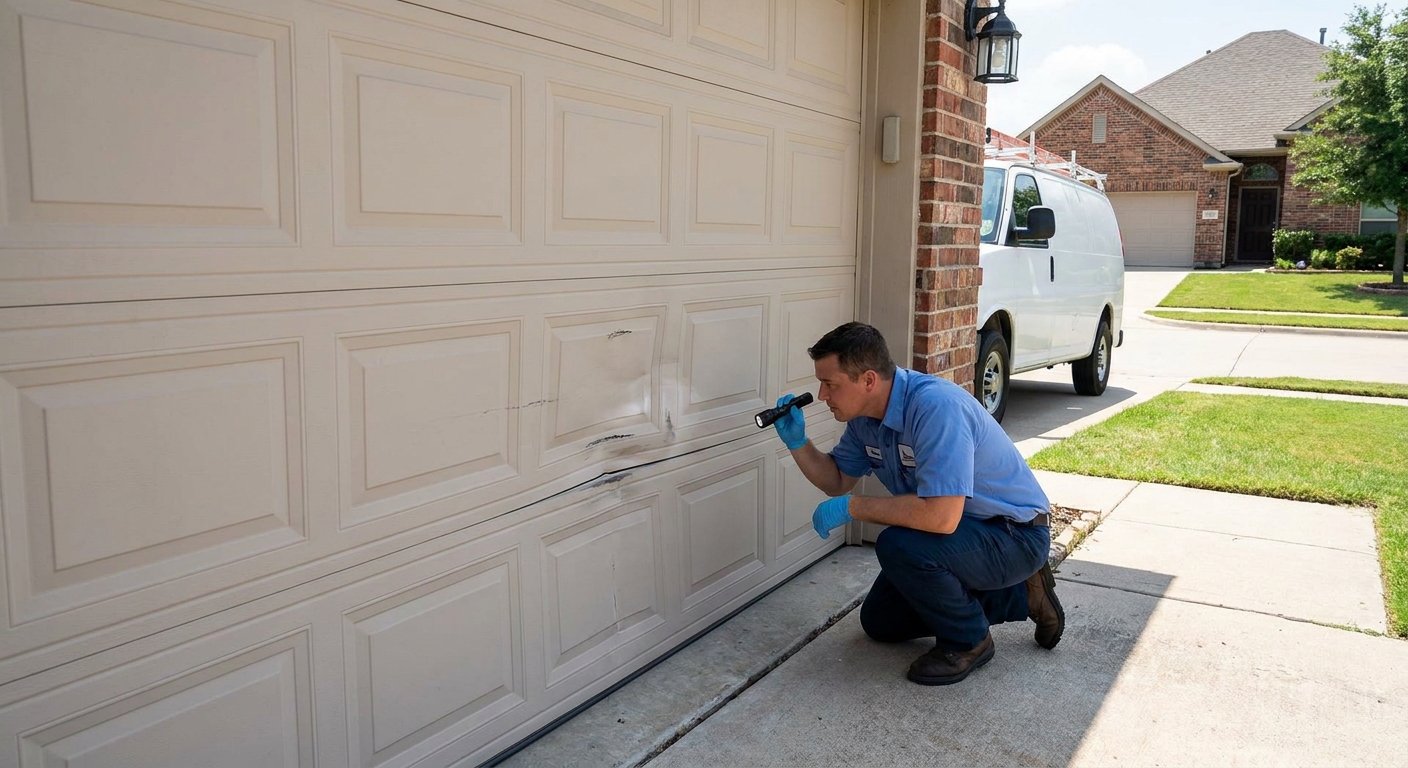
- Whether the panel is structurally sound or just cosmetically damaged
- If the damage has affected the door's balance or track alignment
- Availability of matching replacement panels
- Cost comparison between repair and full door replacement
- Safety risks associated with operating a compromised door
DIY Is Tempting but Rarely Worth It
Trying to hammer out a dent yourself or paint over rust without proper prep? The results usually show. Garage doors operate under tension, and even minor repairs involve springs, tracks, and heavy panels that can cause serious injury if mishandled.
Most homeowners who go the DIY route end up calling a pro anyway — after they've made the damage worse or realized the door won't close right. Proper repairs require specialized tools, knowledge of how the door's components interact, and an understanding of when a fix is viable versus when it's just masking a bigger issue.
Cost Isn't Always the Deciding Factor
Repair might seem cheaper upfront, but if the panel's barely holding together or the door is nearing the end of its lifespan, you're just delaying the inevitable. A full replacement might cost more now, but it eliminates recurring problems and gives you a door that's energy-efficient, secure, and built to handle whatever Dallas-Fort Worth weather throws at it.
On the flip side, if the door is solid and the damage is isolated, repair can save you hundreds — sometimes thousands — compared to replacement. The smart move is weighing the condition of the entire door against the cost and longevity of the fix.
Storm Damage Changes the Equation
Hail season in North Texas doesn't mess around. A single storm can leave multiple panels dented, bent, or punctured. When that happens, the math shifts. Repairing one panel is cost-effective. Repairing four? You're approaching the cost of a new door — and you'll still be left with an older system that's more vulnerable next time.
Insurance claims add another layer. If your policy covers the damage, garage door installation might be fully or partially covered, making it the more practical choice even if repair is technically possible.
Documentation and Professional Opinion Keep You Covered
- Photos of the damage from multiple angles
- Written assessment from a licensed garage door technician
- Repair estimate versus replacement cost breakdown
- Manufacturer information and panel availability report
- Proof of how the damage occurred, especially for insurance purposes
Speed Matters When the Door's Compromised
A damaged panel isn't just ugly — it's a security risk. If the door won't close properly or the panel has a gap, you're inviting weather, pests, and potential break-ins. Addressing the issue quickly, whether through repair or replacement, protects your home and prevents the damage from spreading to other components like the opener or tracks.
Waiting around hoping the problem resolves itself? That's not a strategy. The longer a compromised panel stays in place, the more strain it puts on the rest of the system. What starts as a $200 repair can turn into a $1,500 replacement if you let it slide.
Real Solutions Come from Real Assessments
Taking on a damaged panel isn't the hard part. Knowing whether to repair or replace — and making that call based on what's actually going on with the door, not just what looks fixable — that's where homeowners get caught off guard. There's no excuse for guessing when the right technician can give you a clear answer. But there's also no point paying for a repair that won't hold or ignoring a problem that's only going to escalate. Professional garage door services provide accurate assessments based on regular maintenance standards. Get it assessed. Make the call. Move forward with confidence.
Let’s Get Your Garage Door Back on Track
We know how important it is to have a garage door that’s safe, secure, and looks great. If you’re dealing with a damaged panel and aren’t sure what your next step should be, let’s figure it out together. Give us a call at 817-973-5650 to talk with our team, or book an appointment and we’ll help you restore your garage door’s function and curb appeal without the guesswork.
‹ Back
Recent Posts
-
-
Why Is Your Garage Door in Dallas-Fort Worth Shaking When It Opens?
September 17, 2026
-
Should You Replace Both Garage Door Springs in Denver at Once?
September 3, 2026
-
Why Does Your Garage Door in Denver Close & Then Reopen?
August 20, 2026
-
Can You Open a Garage Door in Denver During a Power Outage?
August 6, 2026